
We are an affiliate
We hope you love the featured products! Just so you know, we may collect a share of sales or other compensation from the links on this page, at no extra cost for the buyer. Thank you if you use our links, we really appreciate it!
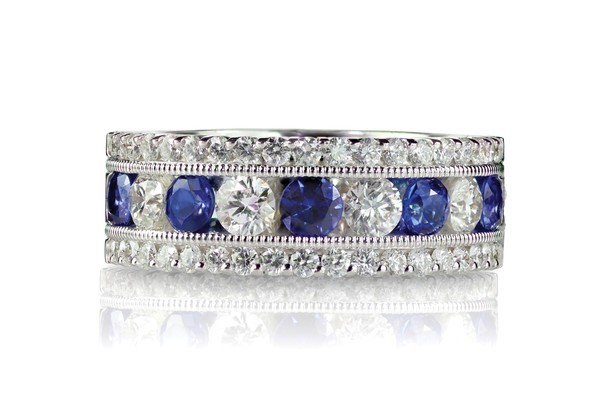 White sapphire is a stunning gemstone that is often used as an alternative to diamonds in engagement rings and other jewelry.
It is a colorless variety of the mineral corundum, just like a diamond, and ranks 9 on the Mohs scale of mineral hardness, making it a durable and scratch-resistant gem.
However, despite its durability, white sapphire can indeed get cloudy over time if not properly maintained.
What is White Sapphire?
White sapphire is a mesmerizing gemstone renowned for its brilliance, purity, and elegance.
A variety of the mineral corundum, it derives its captivating name from its colorless or near-colorless appearance.
This exquisite gem is highly sought after in the world of jewelry due to its remarkable clarity and luminosity, often rivaling that of diamonds.
White sapphires exude an incomparable radiance, captivating the onlooker with their natural beauty and sophistication.
Known for their exceptional hardness, ranking only second to diamonds on the Mohs scale, white sapphires possess remarkable durability, making them an ideal choice for engagement rings, necklaces, and other fine jewelry.
Their durability ensures that they withstand the test of time, maintaining their pristine allure for generations.
Moreover, white sapphires are also highly versatile, seamlessly complementing both traditional and contemporary designs.
Beyond their aesthetic appeal, white sapphires possess symbolic meanings as well.
Associated with wisdom, serenity, and purity, these gems are believed to promote mental clarity, enhance intuition, and elevate spiritual enlightenment.
They are often revered as symbols of truth and fidelity, making them fitting choices for engagement rings and other meaningful pieces.
White Sapphire vs Diamond
White sapphire and diamond are two stunning gemstones cherished for their exceptional beauty and durability.
While both possess a dazzling brilliance, there are distinct differences that set them apart.
Diamonds are renowned for their unparalleled hardness, ranking a perfect 10 on the Mohs scale.
This remarkable resilience allows diamonds to withstand the test of time, making them an excellent choice for engagement rings and heirloom pieces.
White sapphires, on the other hand, score a solid 9 on the Mohs scale, making them a close competitor in terms of durability.
One of the key discrepancies between these gemstones lies in their composition.
Diamonds are composed solely of carbon, while sapphires consist of aluminum oxide with traces of other elements.
This dissimilarity in composition gives diamonds their unparalleled brilliance, characterized by the way they refract light.
White sapphires, although captivating, possess a slightly lower refractive index, resulting in a touch less sparkle.
Another aspect to consider is the color.
As the name suggests, white sapphires exhibit a pure white hue, while diamonds are often admired for their colorless or near-colorless appearance.
This distinction in color can affect the overall aesthetic of a piece and may be a defining factor for those seeking a specific look.
In conclusion, the choice between white sapphire and diamond ultimately depends on personal preferences and budget.
Diamonds offer unmatched durability, exceptional brilliance, and timeless appeal, making them an enduring choice.
White sapphires, with their luminous beauty and more affordable price point, are an attractive alternative for those looking to make a statement without compromising on elegance.
White Sapphire vs Moissanite
White sapphire and moissanite are two popular choices for individuals seeking an alternative to traditional diamond engagement rings.
Though both gemstones share characteristics that make them attractive options, they differ in terms of their origins, brilliance, durability, and cost.
White sapphire, a natural gemstone, derives its colorlessness from the crystallization of aluminum oxide deep within the earth’s crust.
Highly regarded for its hardness and durability, white sapphire ranks just below a diamond on the Mohs scale.
With its excellent brilliance and sparkle, it is a stunning substitute for a diamond.
However, due to its natural occurrence, white sapphires can have slight variations in color, clarity, and cut.
On the other hand, moissanite, a lab-created gemstone, is composed of silicon carbide.
Although it can be found in natural deposits, they are very scarce.
Moissanite is praised for its exceptional brilliance and fire, often displaying more rainbow-like flashes than a diamond.
After all, there is a reason for the fame of “moissanite fire”.
Moreover, it is nearly as hard as a sapphire, making it suitable for daily wear.
Being engineered in controlled environments, moissanites offer consistent quality in terms of color, clarity, and cut.
One significant difference between white sapphire and moissanite lies in their cost.
White sapphires tend to be more expensive than moissanites, primarily due to their rarity as a natural gemstone.
Meanwhile, moissanite’s affordability makes it an appealing alternative for individuals seeking a larger stone within their budget.
In conclusion, both white sapphire and moissanite offer captivating options for those seeking alternatives to traditional diamond engagement rings.
While white sapphires showcase natural beauty and durability, moissanites offer remarkable brilliance and affordability.
White Saphire vs Cubic Zirconia
White sapphires and cubic zirconia, while both stones possess some similarities in terms of appearance, they differ significantly in composition and overall quality.
With its remarkable brilliance and colorlessness, white sapphire closely resembles a diamond, making it an appealing option for those seeking an elegant and affordable alternative.
However, it is worth noting that white sapphires may exhibit slight internal inclusions, diminishing their optical clarity when compared to diamonds.
On the other hand, Cubic Zirconia (CZ) is a synthetic gemstone created in a laboratory.
Composed of zirconium dioxide, CZ imitates the appearance of a diamond, often displaying impressive brilliance and clarity.
Although it has a similar visual appeal to white sapphire, cubic zirconia is generally less expensive.
However, it is also less durable as it is prone to scratching and showing signs of wear over time.
In summary, while both white sapphire and cubic zirconia offer attractive alternatives to diamonds, they differ in terms of composition and durability.
White sapphire, being a natural gemstone, boasts superior hardness and longevity.
Conversely, cubic zirconia, a synthetic material, provides a more cost-effective solution for those seeking diamond-like brilliance.
How to Maintain White Sapphire to Prevent Cloudiness
To prevent white sapphire from getting cloudy, it is essential to clean the gem regularly and avoid exposing it to harsh chemicals.
Professional cleaning by a jeweler can help restore its luster, and proper storage when not in use can prevent the gem from getting dirty.
Keep your jewelry in separate soft pouches and never throw them in the same drawer or jewelry box.
By taking these maintenance steps, white sapphire can maintain its clarity and brilliance for years to come.
Conclusion
White sapphire, also known as colorless sapphire, is a gemstone that closely resembles a diamond with its sparkle and brilliance.
It is a popular choice for engagement rings due to its lower price compared to diamonds and its durability for daily wear.
White sapphires make a great alternative to diamond engagement rings for those looking for a durable and beautiful gem at a lower cost.
Its pristine appearance, equivalent to that of a diamond, coupled with its exceptional hardness, has solidified its place as a popular choice among discerning jewelry collectors and enthusiasts alike.
Whether adorning an engagement ring or serving as a centerpiece in a pendant, white sapphires undoubtedly elevate any piece of jewelry to extraordinary heights of elegance and sophistication.